The story of bastet egyptian goddess begins thousands of years ago ...

All Egyptian Gods have fascinated humanity for thousands of years, forming the cornerstone of ancient Egyptian gods and goddesses mythology. From the mighty Ra Egyptian God, the sun deity, to lesser-known figures like Bes Egyptian God and Egyptian dog gods, each deity played a distinct role in shaping Egyptian civilization gods and human life. Understanding all ancient Egyptian gods and goddesses provides insight into how Egyptians viewed the cosmos, life, death, and the afterlife.
Travelers to Egypt often encounter representations of all Egyptian gods and goddesses in temples, tombs, statues, hieroglyphs, and modern museum displays. These include the major deities like Osiris Egyptian God, Horus Egyptian God, Isis Egyptian God, Thoth Egyptian God, Set Egyptian God, and animal gods such as Egyptian cat god and Egyptian crocodile god. Each god had specific powers, from Egyptian god of war to Egyptian god of the dead, and symbols that helped people navigate daily life and spirituality.
Egyptian gods all had family trees linking them across generations. Geb Egyptian God, the earth, fathered major deities, while Nut Egyptian God, the sky goddess, nurtured them. This interconnectedness formed a divine hierarchy often reflected in temples and shrines. Even minor gods, like ancient Egyptian god of love or Egyptian god of the moon, influenced rituals and festivals that are still visible in Egyptian culture today.
5 Stars Egypt Tours Present this guide For students, travelers, and history lovers, learning all about Egyptian gods and goddesses enriches their understanding of Egyptian civilization gods and goddesses. It explains why Egyptians built magnificent temples, performed elaborate rituals, and left behind sacred texts. Visiting sites such as Karnak, Luxor, and Dendera reveals the immense respect for all the Egyptian gods and the continuity of their influence in Egyptian culture.
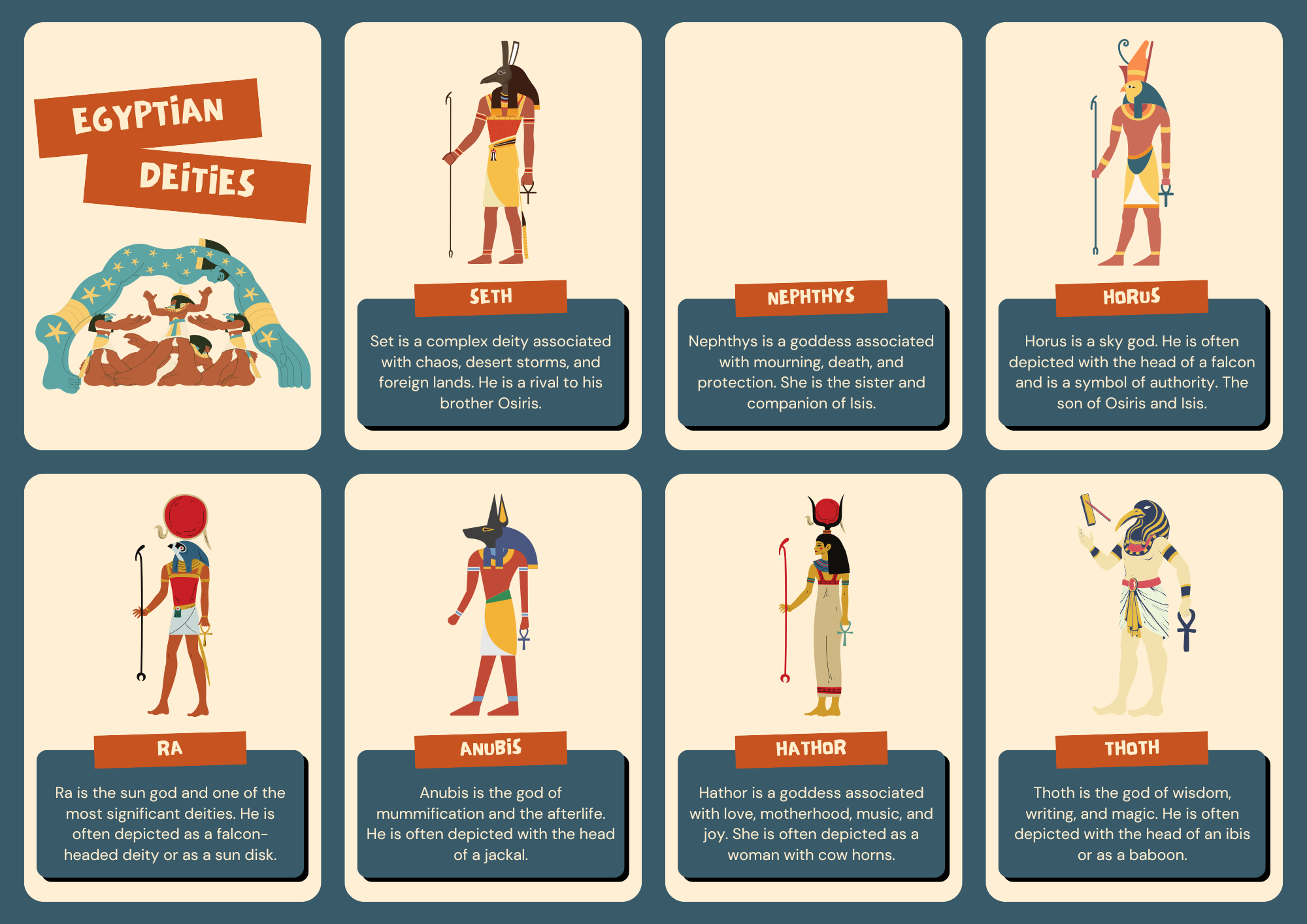
Among all ancient Egyptian gods, Ra Egyptian God stands as the supreme sun deity and Egyptian god of all gods. Often shown with a falcon head and solar disk, Ra was worshipped across Egypt, sometimes merging with Amun Egyptian God as Amun Ra Egyptian God, forming a central figure in the pantheon.
Ra’s influence permeated mythology, guiding creation, light, and life itself. As the Egyptian sun god, he traveled across the sky daily, and his nightly journey through the underworld represented life, death, and resurrection. This cycle is closely linked with Egyptian god of the underworld and other deities like Osiris Egyptian God. Ra’s role also reinforced cosmic order, alongside Maat Egyptian God, maintaining balance in both nature and society.
Travelers exploring Egyptian temples witness Ra’s influence in grand sun motifs, hieroglyphs, and statues. Sites like Heliopolis, Karnak, and Dendera Temple display depictions of Ra and his divine interactions with other gods, such as Horus Egyptian God, Thoth Egyptian God, and Set Egyptian God. Even modern visitors can see Egyptian god cards featuring Ra and related deities, connecting ancient worship to contemporary culture.
Ra’s importance extends beyond Egypt. In the family tree of Egyptian gods, he is often considered the progenitor of other major gods, highlighting his supreme status. Understanding Ra allows travelers and history lovers to connect temple art, solar symbolism, and mythological stories, creating a richer experience of Egypt of gods and the civilization that revered them.
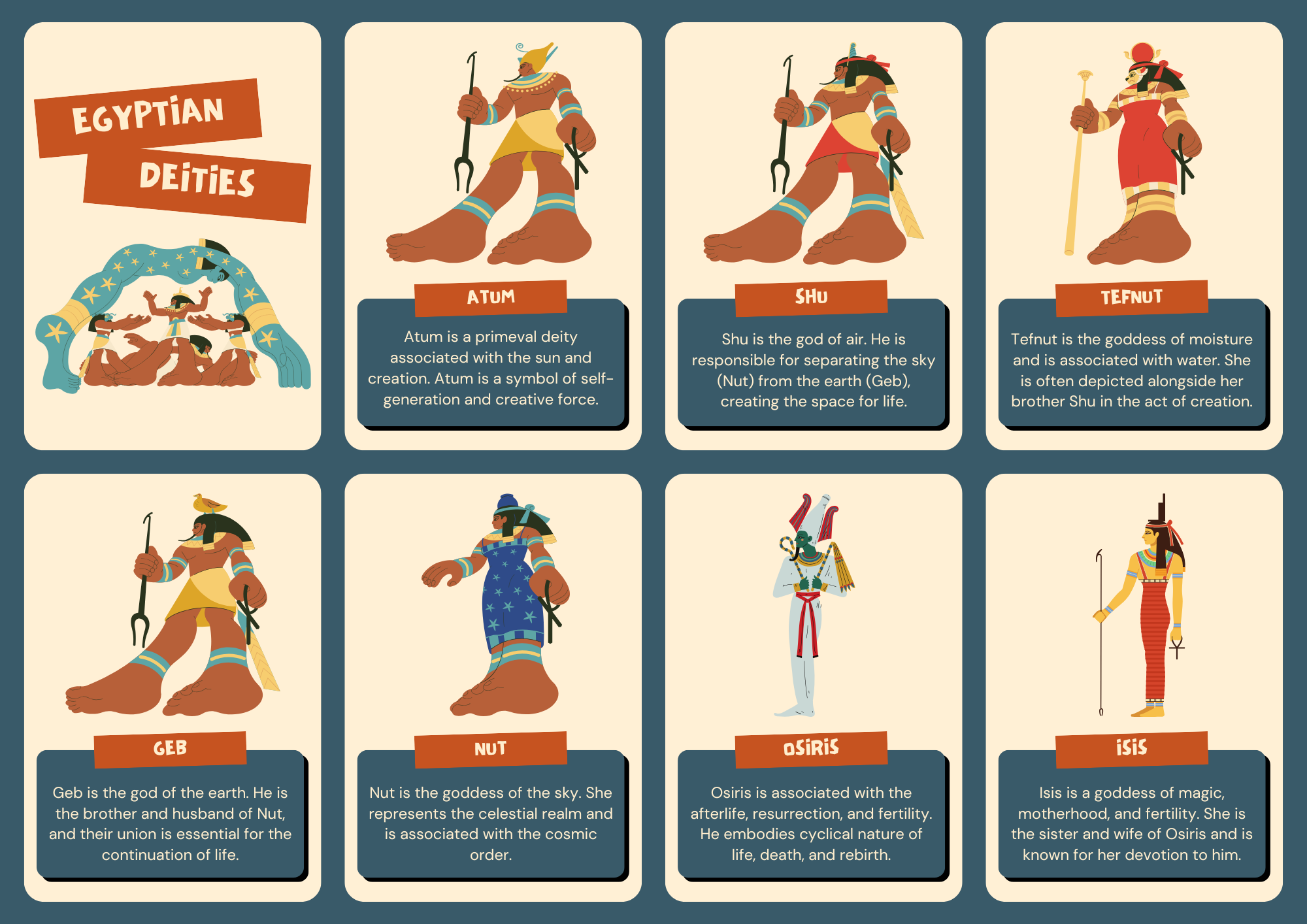
Among all Egyptian gods, Osiris Egyptian God is central as the Egyptian god of the dead, ruling the underworld and guiding souls to the afterlife. Often depicted as a green-skinned man with a white crown, Osiris represents resurrection, fertility, and justice. He is married to Isis Egyptian God, and their stories illustrate the divine interplay among all Egyptian gods and goddesses.
Osiris’ myth involves betrayal by Set Egyptian God, his brother, and eventual resurrection by Isis Egyptian God. This story explains the natural cycles of death and rebirth and the principle of moral justice in Egyptian culture. Ancient Egyptian gods names like Osiris, Horus, and Thoth appear repeatedly in tombs and temple reliefs, emphasizing Osiris’ pivotal role.
Visitors can see Osiris in temples at Abydos, Luxor, and the Valley of the Kings, where depictions highlight his connection with Maat Egyptian God, Anubis Egyptian God, and Thoth Egyptian God. These sites reveal Osiris’ influence on funerary practices, rituals, and art. Even Egyptian god statues and Egyptian gods pictures preserve his imagery for modern enthusiasts.
Osiris is also tied to fertility and agriculture, showing the practical influence of gods in ancient Egyptian gods society. Understanding Osiris enriches travelers’ comprehension of Egyptian myths, temples, and the philosophical principles guiding life and afterlife, making visits more meaningful.
Among all Egyptian gods and goddesses, Isis Egyptian God is one of the most revered, symbolizing magic, healing, motherhood, and protection. She played a crucial role in ancient Egyptian gods and goddesses mythology, particularly as Osiris’ wife and Horus’ mother. Often depicted with a throne-shaped crown or wings, Isis’ imagery is widespread in temples, amulets, and statues.
Isis’ magical abilities helped resurrect Osiris and protect Horus, emphasizing her significance in Egyptian gods names and stories of divine power. She worked alongside Thoth Egyptian God, Anubis Egyptian God, and Ra Egyptian God, demonstrating how all Egyptian gods cooperated within the cosmic order. Travelers visiting Philae Temple or Dendera often encounter her richly decorated shrines, revealing her influence across Egyptian civilization gods.
Her impact extends beyond Egypt. Isis inspired later Mediterranean and European religious traditions, highlighting the enduring legacy of ancient Egyptian gods and goddesses. Her associations with healing, protection, and motherhood make her an appealing figure for modern visitors, students, and history lovers.
Isis’ symbolism is also seen in Egyptian god cards, museum exhibits, and educational tours, illustrating her connection to both divine myths and cultural practices. She represents the Egyptian goddess of magic, bridging divine mythology with practical guidance for life, protection, and spiritual understanding.
Horus Egyptian God, often depicted as a falcon-headed deity, is among all ancient Egyptian gods with a central role in royal and cosmic order. Known as the Egyptian god of the sky and protector of the Pharaoh, Horus symbolizes kingship, victory, and divine authority. His battles with Set Egyptian God / Seth Egyptian God reflect the struggle between order and chaos, a recurring theme in ancient Egyptian gods and goddesses mythology.
Horus’ family connections tie him to Osiris Egyptian God (father), Isis Egyptian God (mother), and other deities in the family tree of Egyptian gods. His eye, the Eye of Horus Egyptian God, symbolizes protection, healing, and power. Modern travelers often see its representation in tattoos Egyptian gods, jewelry, and temple reliefs.
Temples such as Edfu showcase Horus’ victories and reinforce his role as guardian of Egypt. Depictions of Horus appear alongside Thoth Egyptian God, Maat Egyptian God, and Ra Egyptian God, showing collaboration among all Egyptian gods and goddesses names. Horus’ protective qualities also extend to the underworld, linking him with Anubis Egyptian God and Osiris Egyptian God, illustrating his multifaceted role.
Horus’ mythology and symbolism provide a compelling narrative for travelers, blending divine power, family dynamics, and cosmic principles. Understanding Horus enhances visits to Egyptian temples, artifacts, and cultural sites, making his story an integral part of exploring Egypt gods, Egyptian civilization gods, and the pantheon of all Egyptian gods.

Among all Egyptian gods, Anubis Egyptian God holds a crucial role as the Egyptian god of death and guardian of the underworld. Often depicted as a black jackal or a man with a jackal head, Anubis oversaw embalming, mummification, and the journey of souls to the afterlife. As part of the family tree of Egyptian gods, Anubis is closely linked to Osiris Egyptian God, guiding the deceased toward judgment.
Anubis’ significance extends to ancient Egyptian gods and goddesses rituals. His protection ensured the safe transition of spirits, with Maat Egyptian God weighing hearts against the feather of truth. Travelers visiting the Valley of the Kings or Saqqara often encounter Egyptian god statues of Anubis, reflecting his role in funerary rites. Modern representations include Egyptian god cards, tattoos, and museum exhibits, connecting ancient worship with contemporary culture.
Anubis also represents divine morality, demonstrating the interplay between all ancient Egyptian gods in maintaining cosmic order. Stories depict him collaborating with Thoth Egyptian God, Osiris Egyptian God, and Isis Egyptian God, showing how all Egyptian gods and goddesses worked together to sustain life, death, and resurrection. Understanding Anubis enhances travelers’ experiences of Egypt of gods, highlighting the depth of Egyptian spirituality and funerary culture.
Thoth Egyptian God, also called Thoth the ancient Egyptian god or Tehuti Egyptian God, is the deity of wisdom, writing, and knowledge among all Egyptian gods. Depicted with the head of an ibis or a baboon, Thoth recorded judgments of the dead, guided Maat Egyptian God in maintaining balance, and invented writing, mathematics, and astronomy.
As part of the Egyptian gods family tree, Thoth played a vital role in supporting other deities, including Ra Egyptian God, Osiris Egyptian God, and Horus Egyptian God. His influence is apparent in ancient Egyptian god statues, temple hieroglyphs, and Egyptian gods pictures. Students and history lovers often find Thoth’s wisdom crucial for understanding all about Egyptian gods and goddesses and their mythology.
Modern travelers encounter Thoth’s legacy in museum collections, temple reliefs, and educational tours. His connection to magic, time, and learning links to all ancient Egyptian gods and goddesses, bridging mythological, spiritual, and cultural dimensions. From Egyptian god cards to scholarly texts, Thoth’s presence demonstrates the enduring importance of knowledge, law, and divine guidance in Egyptian civilization gods.
Set Egyptian God, also spelled Seth Egyptian God or Sutekh Egyptian God, represents chaos, disorder, storms, and warfare among all ancient Egyptian gods. Often depicted with a mysterious animal head, Set played a dual role: a challenger to order but also a necessary force for balance.
As part of the family tree of Egyptian gods, Set is Osiris’ brother and Horus’ adversary, embodying conflict within the divine lineage. Stories of Set’s battles with Horus illustrate the struggle between chaos and order, a central theme in ancient Egyptian gods and goddesses mythology. Visitors to Temple of Seti I in Abydos or Karnak can see Egyptian god statues and depictions of Set’s role in myths.
Set’s symbolism extends to modern culture, including Yugioh Egyptian God Cards and references in media as Egyptian god of chaos or Egyptian god of disorder. Understanding Set helps travelers and students interpret Egyptian art, temples, and mythology, providing insight into the complex interactions among all of the Egyptian gods and goddesses.
Amun Egyptian God, often merged as Amun Ra Egyptian God, was a central figure in all Egyptian gods worship. Known as the “hidden one,” Amun symbolized creation, protection, and supreme power. As Egyptian god of gods, he was worshipped in Thebes, with the Karnak Temple serving as a major center of devotion.
Amun’s influence is intertwined with Ra Egyptian God, forming Amun Ra, a supreme deity combining solar and hidden aspects. Travelers to Luxor and Karnak experience monumental statues and obelisks dedicated to Amun, illustrating the grandeur of Egyptian civilization gods and goddesses.
In myths, Amun interacts with all ancient Egyptian gods, including Thoth Egyptian God, Horus Egyptian God, and Isis Egyptian God, showing divine collaboration in maintaining cosmic order. Educational tours, museum exhibits, and even Egyptian god cards preserve Amun’s legacy, offering modern audiences insight into the spiritual heart of ancient Egypt gods.
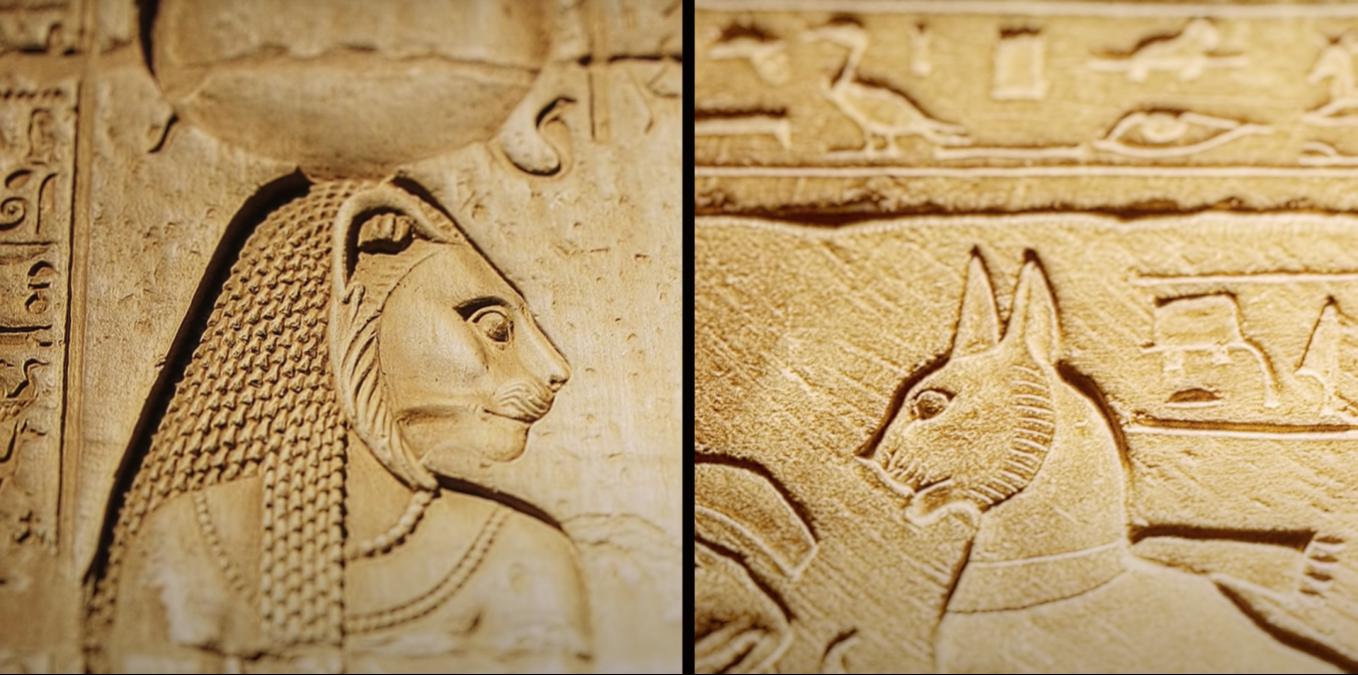
Bastet Egyptian God, also called Bast Egyptian God, is among all Egyptian gods and goddesses with a unique focus on home, protection, and cats. Depicted as a lioness or cat-headed woman, Bastet protected families, fertility, and children while warding off evil spirits.
Bastet’s prominence is reflected in temples at Bubastis and widespread artifacts, Egyptian god statues, and paintings. As part of the Egyptian gods family tree, Bastet connects to Ra Egyptian God (as her father in some myths) and complements deities like Sekhmet Egyptian God. She also appears in modern culture, including Egyptian god cards, educational texts, and travel literature.
Bastet represents the connection between humans, animals, and divine protection. Travelers encountering her temples, artworks, and museum pieces gain insight into all about Egyptian gods and goddesses, from protective powers to mythological stories. Her association with cats also links to cats and Egyptian gods, illustrating the spiritual significance of animals in ancient Egyptian gods mythology.
Among all Egyptian gods and goddesses, Sekhmet Egyptian God is known as the fierce lioness deity of war, vengeance, and healing. Her name means “the powerful one,” and she embodies both destructive and protective qualities. She was worshipped across Egypt and associated with Ra Egyptian God, often seen as his daughter in myths.
Sekhmet’s role highlights the duality of life in ancient Egyptian gods and goddesses mythology—she could punish the wicked while curing the sick. Visitors to temples in Memphis and Luxor can see Egyptian god statues depicting her lioness form, reinforcing her power. Sekhmet appears alongside Maat Egyptian God, Thoth Egyptian God, and Horus Egyptian God, showing her interactions within the Egyptian gods family tree.
Modern travelers and history enthusiasts often see her represented in Egyptian gods pictures, tattoos Egyptian gods, and even Egyptian god cards, bridging ancient myths with contemporary culture. Understanding Sekhmet enriches visits to Egyptian museums, temples, and cultural sites, highlighting her importance among all of the Egyptian gods and goddesses.
Hathor Egyptian God, the goddess of love, music, joy, and motherhood, is a key figure among all ancient Egyptian gods and goddesses. Depicted with cow horns and a solar disk, Hathor embodies fertility, beauty, and divine feminine power.
Hathor’s influence spans festivals, rituals, and daily life in Egyptian civilization gods, often connected with Ra Egyptian God, Thoth Egyptian God, and Isis Egyptian God. Her temples, such as Dendera Temple, reveal intricate carvings, Egyptian god statues, and depictions of celestial journeys. Travelers exploring Egypt can witness Hathor’s art, symbolism, and stories, deepening their appreciation of all about Egyptian gods and goddesses.
Hathor’s role also extends to Egyptian god cards, educational tours, and museum exhibits, making her myth accessible to students and enthusiasts. Her connection to love, joy, and protection illustrates the balance of powers in all the Egyptian gods, enhancing cultural understanding for travelers.
Ptah Egyptian God was the deity of creation, craftsmen, and architects, central to ancient Egyptian gods mythology. Depicted as a mummified figure with a staff, Ptah represents innovation, craftsmanship, and divine creativity.
Ptah’s role is foundational in the family tree of Egyptian gods, often linked with Sekhmet Egyptian God, Nefertem, and other deities in creation myths. Temples in Memphis display ancient Egyptian god statues of Ptah, emphasizing his influence on construction, arts, and religious rituals. His symbolic role also includes Egyptian god symbols, connecting spiritual and material creation.
Travelers interested in Egyptian civilization gods and goddesses will find Ptah’s temples and artifacts demonstrate how craftsmanship was considered sacred. Ptah is also represented in Egyptian god cards, modern books, and Egyptian gods pictures, making him a bridge between ancient beliefs and contemporary education on all Egyptian gods.
Among all Egyptian gods, Sobek Egyptian God, the crocodile deity, symbolizes strength, protection, and fertility. Depicted with a crocodile head, Sobek’s myths highlight his role in ancient Egyptian gods beliefs about water, life, and protection against chaos.
Sobek interacts with Ra Egyptian God, Horus Egyptian God, and Set Egyptian God, showing the balance between order and chaos in all of the Egyptian gods and goddesses. His temples, such as Kom Ombo, provide insight into rituals, crocodile mummification, and divine reverence. Travelers can observe Egyptian god statues and symbolic artifacts, deepening understanding of cats and Egyptian gods, crocodile worship, and minor animal deities.
Modern references include Egyptian god cards, books, and educational exhibits, illustrating Sobek’s enduring influence. Sobek’s myths connect natural elements, divine protection, and societal harmony, offering travelers a deeper appreciation of all ancient Egyptian gods and goddesses.
Khonsu Egyptian God, the moon deity, represents time, healing, and celestial cycles. Among all ancient Egyptian gods, Khonsu played a critical role in guiding lunar phases, regulating calendars, and supporting life through cosmic influence. Depicted as a youthful figure with a sidelock and lunar disk, Khonsu interacts with Amun Egyptian God, Ra Egyptian God, and Thoth Egyptian God.
Khonsu’s significance extends to medicine, astrology, and divine protection. Temples such as Karnak and Luxor display ancient Egyptian god statues and inscriptions emphasizing his importance in all of the Egyptian gods. Travelers interested in astronomy and mythological symbolism can witness Egyptian gods pictures and artifacts highlighting Khonsu’s contributions.
He is also referenced in Egyptian god cards, museum exhibits, and scholarly texts, demonstrating his enduring influence. Understanding Khonsu enhances comprehension of Egyptian civilization gods, lunar worship, and the interplay of celestial and terrestrial powers in all Egyptian gods and goddesses mythology.
Among all Egyptian gods and goddesses, Maat Egyptian God represents truth, justice, and the cosmic order. Integral to ancient Egyptian gods and goddesses mythology, Maat ensured balance in the universe, guiding Pharaohs and interacting with Ra Egyptian God, Thoth Egyptian God, and Osiris Egyptian God.
Her symbolic feather was used in the weighing of the heart ceremony, central to understanding the Egyptian god of the dead concept. Travelers visiting the Temple of Karnak or the Valley of the Kings can see depictions of Maat on Egyptian god statues and hieroglyphs, showing her crucial role in morality and law.
Maat’s influence extends to Egyptian god cards, educational exhibits, and museum collections, highlighting her significance in all ancient Egyptian gods and all of the Egyptian gods and goddesses. Understanding Maat enriches travelers’ appreciation of Egyptian temples, art, and mythology, emphasizing the balance maintained by the pantheon of all Egyptian gods.
Nut Egyptian God and Geb Egyptian God are celestial siblings central to all Egyptian gods and creation myths. Nut, the sky goddess, arches over the earth, while Geb, the earth god, supports life below. Together, they form the foundation of the Egyptian gods family tree, influencing both divine and human realms.
Nut is associated with the night sky, stars, and cosmic cycles, connecting with Thoth Egyptian God for calendars and timekeeping. Geb represents fertility, agriculture, and the sustenance of life, interacting with Osiris Egyptian God, Horus Egyptian God, and Ra Egyptian God. Travelers exploring temples in Luxor and Dendera encounter elaborate depictions of Nut and Geb, showing their importance among all ancient Egyptian gods and goddesses.
These deities also appear in Egyptian gods pictures, statues, and even Egyptian god cards, providing a tangible link for history lovers and students. Understanding Nut and Geb allows travelers to grasp the interplay of sky, earth, and divine order in all about Egyptian gods and goddesses.
Apophis Egyptian God, also called Apep, represents chaos, darkness, and the eternal struggle against Ra Egyptian God, the sun deity. Among all Egyptian gods, Apophis is an adversary, threatening cosmic order and engaging other deities like Set Egyptian God, Thoth Egyptian God, and Horus Egyptian God in mythological battles.
Temples and texts depict Apophis as a giant serpent defeated nightly by Ra, symbolizing the triumph of order over chaos. Travelers exploring temples of Thebes or museum exhibits can see Egyptian gods statues and artwork illustrating this eternal struggle. Apophis’ story also appears in Egyptian god cards and educational resources, linking ancient myths with modern interpretations.
Apophis’ presence highlights the balance between creation and destruction in ancient Egyptian gods and goddesses mythology. Recognizing his role enriches understanding of Egyptian god of the underworld, cosmic battles, and the dynamic interactions within all Egyptian gods and goddesses names.
Bes Egyptian God, Atum Egyptian God, and Nun Egyptian God represent diverse aspects of all Egyptian gods: protection, creation, and primordial chaos.
Bes Egyptian God is the protective dwarf god of households, childbirth, and music, often appearing in Egyptian gods pictures, statues, and amulets.
Atum Egyptian God, creator deity, represents the origin of life and the universe, interacting with Ra Egyptian God and Amun Egyptian God.
Nun Egyptian God embodies primordial waters, forming the source from which creation emerged, linked to ancient Egyptian gods names and creation myths.
Visitors to Egypt witness their influence in temples, artifacts, and Egyptian god cards, connecting divine mythology with everyday life. These gods demonstrate the diversity of powers among all the Egyptian gods and goddesses, from domestic protection to cosmic creation. Students and travelers alike gain insights into Egyptian spirituality and the underlying structure of the Egyptian gods family tree.
The Egyptian gods and goddesses names are interconnected in complex family trees of the Egyptian gods, showing relationships among deities like Ra Egyptian God, Osiris Egyptian God, Isis Egyptian God, Horus Egyptian God, Anubis Egyptian God, Set Egyptian God, Thoth Egyptian God, and Amun Egyptian God.
Understanding their powers—from Egyptian god of the sun, Egyptian god of death, Egyptian god of cats, to Egyptian god of war—provides travelers with insights into temples, tombs, and daily rituals of ancient Egypt gods. Family trees illustrate divine hierarchy, succession, and interdependence, helping visitors grasp the full scope of Egyptian mythology.
Modern relevance includes Egyptian god cards, educational books, museum exhibits, tattoos, and cultural tours highlighting all Egyptian gods and goddesses names. Travelers, students, and history enthusiasts exploring Egypt encounter their statues, temples, and artistic representations, offering a direct connection to the spiritual and cultural legacy of all about Egyptian gods.
From major deities to minor gods, from celestial beings to animal protectors, all Egyptian gods remain central to understanding Egypt’s mythology, art, and history, making visits to Egypt more enriching and immersive.
Khepri is one of the most fascinating ancient Egyptian gods, often depicted as a scarab beetle or a man with a scarab head. His name means “to become” or “to come into existence,” highlighting his role in the renewal of the sun and life itself. As part of all Egyptian gods, Khepri symbolizes the morning sun, which rolls across the sky each day, renewing the world. Travelers exploring temples and tombs in Thebes and Luxor may encounter intricate depictions of Khepri on Egyptian god statues, hieroglyphs, and temple walls.
Khepri was associated with Ra Egyptian God, forming part of the daily solar cycle. Ancient Egyptians believed Khepri pushed the sun across the sky in the morning, similar to how a scarab beetle rolls dung across the ground. This act of cosmic labor tied Khepri to ideas of rebirth, regeneration, and creation, which were central to Egyptian religious thought. Students and enthusiasts studying all ancient Egyptian gods and goddesses often see Khepri’s symbolism in tomb paintings, particularly in the Book of the Dead, representing the deceased’s journey through rebirth in the afterlife.
Khepri’s role extended beyond the sky. As a deity of creation and renewal, he connected with ancient Egyptian gods of the sun, including Amun Ra Egyptian God and Atum Egyptian God, reinforcing the hierarchy of deities responsible for maintaining cosmic balance. For modern travelers and culture lovers, Khepri’s imagery in Egyptian god cards, museum exhibits, and artifacts offers a tangible connection to the spiritual life of the ancients. Observing scarab amulets or temple reliefs dedicated to Khepri enriches the visitor experience, combining history, mythology, and artistry.
Moreover, Khepri’s daily cycle was not merely symbolic; it influenced Egyptian civilization gods and goddesses rituals, festivals, and prayers. Ancient Egyptians revered him for bringing life-giving light every morning, ensuring crops thrived along the Nile, and protecting humanity from chaos. Modern travelers can witness Khepri’s legacy in hieroglyphic inscriptions in Dendera, Karnak, and other sacred sites. Understanding Khepri adds depth to any study of all about Egyptian gods, highlighting the integration of natural cycles into religion, art, and daily life.
Sopdet, known as the goddess of the star Sirius, holds a central place among all Egyptian gods and goddesses. She symbolizes fertility, the annual flooding of the Nile, and cosmic cycles. Her appearance heralded the inundation, which provided fertile soil for crops, ensuring survival and prosperity. Travelers and students exploring Egypt can see her influence depicted in tombs, papyri, and ancient Egyptian god statues, often as a woman adorned with a star atop her head.
Sopdet was closely associated with Isis Egyptian God and Osiris Egyptian God, forming part of the mythological framework surrounding life, death, and rebirth. Her astronomical role ties Egyptian religion to observable natural phenomena, reflecting the civilization’s sophisticated knowledge of the stars. By observing her rising star, priests predicted the flooding of the Nile, linking Sopdet directly to Egyptian gods of fertility and agriculture, such as Hapi Egyptian God.
Sopdet’s relevance continues today for travelers visiting astronomical and temple artifacts in museums and ancient sites. Her story enriches understanding of all ancient Egyptian gods and goddesses, connecting celestial observation to human survival and divine mythology. Her iconography in Egyptian gods pictures shows elegance and power, blending cosmic significance with earthly benefits.
Taweret, often depicted as a hippopotamus with feline and crocodile features, is a beloved minor deity among all Egyptian gods and goddesses. She embodies protection, fertility, and motherhood, guarding women and children during childbirth. Statues and amulets of Taweret were commonly placed in homes, demonstrating her practical significance in Egyptian civilization gods and goddesses daily life.
Travelers visiting Luxor and Aswan can see representations of Taweret in temple reliefs and artifacts. She is sometimes paired with Bes Egyptian God, forming a dual protective force in households. Students of Egyptian mythology can explore her role in domestic religion, understanding how minor deities complemented major gods like Isis Egyptian God and Horus Egyptian God in maintaining cosmic and human order.
Taweret’s image also appears in Egyptian god cards, museum displays, and hieroglyphs, symbolizing both spiritual and practical aspects of Egyptian life. By learning about her, travelers gain a richer perspective on all about Egyptian gods, including the roles of deities who may not dominate myths but were essential in daily life.
Renenutet, the goddess of harvest, nourishment, and prosperity, represents the life-sustaining power of the Nile. She is often shown as a cobra or a woman with a cobra head, linking her to Wadjet Egyptian God and other protective deities. As part of all Egyptian gods, Renenutet was essential for ensuring agricultural success, blessing crops, and safeguarding communities from famine.
Travelers exploring ancient temples, tombs, and hieroglyphs will find her depictions, highlighting her vital role in ancient Egyptian gods and goddesses mythology. Her connection to Hapi Egyptian God, god of the Nile, emphasizes the integration of celestial, aquatic, and agricultural cycles in Egyptian religion.
Renenutet’s significance extends to educational displays, Egyptian gods pictures, and modern cultural references, providing insights into the practical aspects of Egyptian spirituality. For students and travelers, understanding Renenutet enriches visits to historical sites, revealing how gods influenced fertility, agriculture, and daily life.
Neith, one of the oldest deities, is associated with war, weaving, and creation. Depicted as a woman holding crossed arrows or a shield, she embodies strength, strategy, and life’s cyclical nature. As part of all ancient Egyptian gods and goddesses, Neith represents the intersection of martial power and creative energy, linking her to Set Egyptian God and Seth the ancient Egyptian god in warrior myths.
Visitors to Sais and other temples will encounter depictions of Neith in hieroglyphs, statues, and wall paintings, demonstrating her role in both protection and creation. She is a fascinating figure for students and travelers seeking to explore the diverse roles of Egyptian deities, beyond the well-known sun, death, and fertility gods.
Neith’s presence in Egyptian gods pictures, museum exhibits, and educational resources emphasizes the complexity of Egyptian religion. She complements major gods like Ra Egyptian God and minor protective deities like Bes Egyptian God, showcasing the balance of power and creation in all Egyptian gods and goddesses names.
While both Taweret Egyptian God and Bes Egyptian God have been mentioned individually, a dedicated section on their combined protective role enriches understanding of all Egyptian gods. Together, they ensured the safety of families, protected children during childbirth, warded off evil spirits, and maintained harmony in homes.
Travelers interested in daily life in ancient Egypt can see their figurines, amulets, and representations in tombs and temples. Bes, the dwarf god, was playful yet fierce, while Taweret provided maternal protection. This pairing highlights the practical religion practiced by Egyptians, illustrating how even minor deities were essential for well-being, fertility, and domestic order.
Their story is a compelling example of how all about Egyptian gods and goddesses extends beyond mythology to practical life, making temple visits, museum exhibits, and educational tours deeply immersive.
Min is one of the most ancient and influential deities among all Egyptian gods, representing fertility, male virility, and agricultural abundance. Often depicted as a man with an erect phallus holding a flail, Min was worshipped to ensure healthy offspring, successful crops, and the vitality of both humans and animals. Ancient Egyptians considered Min essential for sustaining life and the continuity of the civilization, making him a prominent figure in temples dedicated to all ancient Egyptian gods and goddesses.
Min’s worship was closely tied to agricultural cycles, especially during the planting and harvest seasons. The flail and staff he holds symbolize authority and productivity, and his ceremonies often included offerings of grain, cattle, and other agricultural products. Travelers exploring ancient sites in Coptos and Akhmim may find statues, reliefs, and inscriptions honoring Min, highlighting his importance in the daily lives of Egyptians. Students studying all Egyptian gods and goddesses will note how Min complements Renenutet, the goddess of harvest, forming a divine partnership in ensuring fertility and abundance.
Additionally, Min’s role extended to festivals such as the Min Festival, which celebrated the growth of crops and the prosperity of the land. Participants would sing hymns, perform dances, and offer prayers to secure both personal and communal fertility. His connection to ancient Egyptian gods of the sun and sky, like Ra Egyptian God, emphasizes the integration of celestial and earthly forces, showcasing how Egyptians viewed the divine as deeply intertwined with nature.
Modern travelers can experience Min’s legacy through Egyptian gods pictures, museum exhibits, and temple carvings, learning how fertility and life-giving powers were revered across all levels of society. Understanding Min adds depth to the study of all about Egyptian gods and goddesses, highlighting how even deities not widely known today played pivotal roles in shaping culture, society, and mythology.
Hapi is the ancient Egyptian god responsible for the annual flooding of the Nile, a phenomenon that ensured fertile soil and abundant harvests. As one of all Egyptian gods and goddesses, Hapi was depicted as a well-fed man with pendulous breasts and a ceremonial wig, symbolizing nourishment, abundance, and generosity. His role was central to the prosperity of Egypt, linking him directly to the survival and growth of the civilization.
Travelers visiting the temples of Elephantine, Aswan, and Karnak may see depictions of Hapi holding offerings or embracing the Nile’s bounty. Students studying all ancient Egyptian gods learn that Hapi was worshipped in both Upper and Lower Egypt, often represented with symbols like lotus flowers or papyrus plants. His ceremonies coincided with the Nile’s inundation, reinforcing the connection between gods, natural cycles, and human life.
Hapi’s influence extended beyond agriculture. He was considered a mediator between humans and other Egyptian civilization gods, ensuring harmony, balance, and sustenance. The annual festival of the Nile honored Hapi with dances, music, and offerings, creating an immersive cultural experience that travelers and history enthusiasts still study today. His presence in Egyptian god statues, hieroglyphs, and paintings offers a vivid illustration of how Egyptians personified natural phenomena.
By understanding Hapi, visitors gain insights into all about Egyptian gods, exploring how gods not only controlled the cosmos but also directly impacted survival, economics, and society. Hapi remains a timeless symbol of Egypt’s reliance on the Nile, highlighting the integration of nature and divine authority in the mythology of all ancient Egyptian gods and goddesses.
Nephthys is a prominent ancient Egyptian goddess associated with death, protection of the deceased, and funerary rituals. She is often depicted as a woman with hieroglyphic symbols of her name atop her head, standing beside her sister Isis Egyptian God and guarding the coffin of Osiris Egyptian God. As part of all Egyptian gods and goddesses, Nephthys played a crucial role in ensuring safe passage to the afterlife and maintaining cosmic balance.
In mythology, Nephthys represented mourning, care, and guardianship. She was intimately involved in the rituals surrounding death, including embalming, funerary prayers, and the protection of tombs. Travelers exploring Valley of the Kings or ancient temple sites may encounter hieroglyphs and ancient Egyptian god statues depicting Nephthys in funerary scenes. Her connection to Anubis Egyptian God, god of mummification, emphasizes her critical role in the Egyptian underworld and the afterlife journey.
Nephthys also symbolized protection for the living, especially in households, alongside her brother Seth Egyptian God and sister Isis Egyptian God. Her representation in Egyptian gods pictures, museum displays, and tomb paintings demonstrates the intertwining of family, duty, and divine authority in all ancient Egyptian gods and goddesses mythology. For students and travelers alike, studying Nephthys offers insight into Egyptian rituals, emphasizing how deities guided both the living and the dead.
Her role in the mythological narrative is vital for understanding the family tree of Egyptian gods. She bridges the protective forces of domestic life with the spiritual protection needed for the afterlife, making her indispensable in any study of all about Egyptian gods and goddesses.
Wadjet is a cobra goddess who served as the protector of Lower Egypt, symbolizing royalty, protection, and divine authority. Often depicted as a cobra or a woman with a cobra head, Wadjet played a crucial role in safeguarding pharaohs and their dominion. As part of all Egyptian gods, she appears in ancient Egyptian god statues, hieroglyphs, and temple reliefs, emphasizing her protective role over the land and its rulers.
Her association with the Eye of Horus and Ra Egyptian God illustrates her divine function in maintaining balance and guarding against chaos. Travelers visiting the Temple of Philae or temples along the Nile may notice her imagery as a guardian symbol, protecting sacred spaces and pharaohs. Wadjet’s presence highlights how mythology was integrated into political and religious life, reflecting the intertwining of power, spirituality, and protection in all ancient Egyptian gods and goddesses.
Wadjet’s worship extended to personal amulets, statues, and ceremonial practices. Egyptians relied on her for protection in both public and private spheres, making her a vital figure in everyday life. Students of Egyptian history can explore her role in Egyptian gods and goddesses names lists and family trees, noting her link to other major deities like Horus Egyptian God and Neith Egyptian God.
Understanding Wadjet allows travelers and enthusiasts to appreciate the complex nature of Egyptian mythology, where gods and goddesses performed overlapping roles in protection, governance, and cosmic order. She embodies the concept of divine guardianship, making her an essential addition to all about Egyptian gods and goddesses.
Menhit is a fierce ancient Egyptian goddess, often depicted as a lioness or a woman with a lioness head, symbolizing strength, war, and protection. She is considered one of all Egyptian gods and goddesses connected with the military prowess of pharaohs and the safeguarding of Egypt. Her name means “she who massacres,” reflecting her role as a protector in battle, making her a fascinating figure for travelers and students exploring all ancient Egyptian gods.
Menhit’s mythology emphasizes her association with the sun and cosmic order. She was sometimes linked with Sekhmet Egyptian God, another lioness deity, reinforcing the concept of divine guardianship. Travelers visiting sites like Edfu and Abydos can see her depictions in ancient Egyptian god statues and temple reliefs, illustrating her role in battles and her protective powers. She is often depicted holding weapons, ready to defend the land, reflecting the Egyptians’ reverence for gods of war and protection.
In addition to her martial role, Menhit served as a symbolic guardian for communities and pharaohs, ensuring stability and prosperity. She exemplifies the multifaceted nature of all Egyptian gods, showing how deities could influence both spiritual and temporal affairs. Her integration in hieroglyphs, Egyptian gods pictures, and ceremonial artifacts underscores her importance in Egyptian civilization gods and goddesses culture.
For travelers and history enthusiasts, understanding Menhit provides insight into the military and protective aspects of Egyptian mythology. She represents a blend of awe, fear, and admiration, reflecting the Egyptians’ understanding of divine power and the necessity of protection from both earthly and supernatural threats.
Mehet-Weret, meaning “Great Flood” or “Great Cow,” is a cosmic ancient Egyptian goddess associated with creation, the sky, and the Nile. She is depicted as a cow or a woman with cow horns and a sun disk, symbolizing life-giving forces. As part of all Egyptian gods, she represents fertility, cosmic order, and the nurturing powers that sustain the world.
Mehet-Weret is credited with creating the sun god Ra Egyptian God, giving birth to the celestial body that illuminates the world. Travelers exploring temples at Dendera and Edfu can encounter her depictions in reliefs and hieroglyphs, highlighting her cosmic significance. Her association with all ancient Egyptian gods and goddesses showcases the Egyptians’ understanding of divine interconnections, linking sky, earth, and human life.
Her symbolism extended to the Nile’s inundation and agricultural fertility, connecting her to deities like Hapi Egyptian God and Renenutet, emphasizing her influence on both celestial and earthly cycles. Students and enthusiasts studying all about Egyptian gods and goddesses can observe her influence in Egyptian god statues, paintings, and museum artifacts, noting how Mehet-Weret exemplifies creation and nourishment in Egyptian mythology.
For modern travelers, Mehet-Weret’s depictions highlight the Egyptians’ reverence for cosmic and natural order, making her an essential figure for understanding the holistic nature of all Egyptian gods and goddesses names.
Khentyamentiu is a mysterious ancient Egyptian god associated with the necropolis, tombs, and the underworld. Often depicted as a jackal-headed deity, he guarded cemeteries and the spirits of the dead. As part of all Egyptian gods, Khentyamentiu complements Anubis Egyptian God, sharing responsibilities for protection, funerary rites, and safe passage into the afterlife.
Travelers visiting Saqqara and Abydos can encounter depictions of Khentyamentiu in tomb reliefs, hieroglyphs, and ancient Egyptian god statues, reflecting his role in safeguarding the dead. Students studying all ancient Egyptian gods and goddesses can explore how Khentyamentiu’s mythology connects to the Egyptian god of the underworld, illustrating complex divine hierarchies and relationships.
Khentyamentiu also represents the guardianship of sacred burial grounds, ensuring cosmic order and protection against desecration. His imagery often features alongside other deities of death, such as Osiris Egyptian God, Nephthys Egyptian God, and Anubis Egyptian God, emphasizing the interconnected roles of underworld gods in Egyptian mythology.
For travelers and history enthusiasts, understanding Khentyamentiu provides a richer perspective on all about Egyptian gods and goddesses, highlighting the importance of burial practices, afterlife beliefs, and spiritual guardianship in ancient Egypt.
Qebehsenuef is one of the four sons of Horus, a guardian of the deceased in Egyptian mythology. He specifically protected the intestines of the dead, a vital organ preserved during mummification. Depicted as a falcon-headed man, Qebehsenuef is part of all ancient Egyptian gods and goddesses associated with funerary rituals and protection in the afterlife.
Travelers visiting the Valley of the Kings or Egyptian museum collections can see representations of Qebehsenuef on canopic jars, often alongside his brothers: Imsety, Hapi, and Duamutef. This illustrates the meticulous care Egyptians took in safeguarding the body for the afterlife. His role exemplifies the Egyptian gods of the underworld and highlights the civilization’s complex religious practices.
Qebehsenuef’s mythology also intersects with other deities like Anubis Egyptian God and Nephthys Egyptian God, reflecting the collaborative guardianship of the dead in all Egyptian gods and goddesses names. Understanding Qebehsenuef adds depth to the study of all about Egyptian gods, particularly for travelers interested in funerary rituals, mummification, and tomb visits.
Imsety is another of the four sons of Horus, responsible for protecting the liver of the deceased. Depicted as a human-headed man, Imsety is an essential figure among all Egyptian gods and goddesses, particularly those involved in funerary rites and afterlife beliefs.
Travelers exploring museum exhibits, canopic jars, and tombs will often encounter Imsety alongside Qebehsenuef, Duamutef, and Hapi. These deities illustrate the Egyptians’ intricate spiritual and practical approach to death, emphasizing the preservation of vital organs for eternal life.
Imsety’s connections to Anubis Egyptian God and Osiris Egyptian God place him firmly within the Egyptian god family tree, highlighting the collaborative protection of the deceased. For students and enthusiasts studying all ancient Egyptian gods and goddesses, Imsety exemplifies the detailed care Egyptians took in the afterlife, blending religion, ritual, and myth into daily life.
Duamutef is one of the four sons of Horus, charged with protecting the stomach of the deceased. Depicted as a jackal-headed man, he plays a crucial role in Egyptian funerary practices and the preservation of the body for the afterlife. As part of all Egyptian gods and goddesses, Duamutef illustrates the meticulous nature of ancient Egyptian gods and goddesses in ensuring cosmic balance and safe passage into the underworld.
Travelers exploring tombs, canopic jars, and museum exhibits often encounter Duamutef, sometimes alongside his brothers: Qebehsenuef, Imsety, and Hapi. His symbolic guardianship extends to spiritual and ritualistic protection, complementing the roles of Anubis Egyptian God and Osiris Egyptian God in maintaining order and sanctity of burial rites.
Understanding Duamutef enriches knowledge of all about Egyptian gods, highlighting how ancient Egyptians intertwined mythology with practical rituals, illustrating the importance of divine guardianship in the afterlife. For students and history enthusiasts, studying Duamutef reveals the sophistication of Egyptian religious practice, emphasizing that even minor deities played critical roles in the civilization’s spiritual life.
While Taweret Egyptian God and Bes Egyptian God have individual roles, together they form a powerful protective duo. Taweret, the hippopotamus goddess, and Bes, the dwarf god, safeguarded households, mothers, and children from harm, evil spirits, and misfortune. As part of all Egyptian gods and goddesses, their combined worship was central to daily life, illustrating the integration of minor deities in practical religion.
Travelers can witness their influence in amulets, temple carvings, and domestic artifacts, highlighting the Egyptians’ belief in divine protection extending beyond temples into homes. Taweret and Bes complemented major deities like Isis Egyptian God, Horus Egyptian God, and Ra Egyptian God, forming a multi-layered network of divine guardianship.
For history enthusiasts and travelers, learning about Taweret and Bes provides insight into all ancient Egyptian gods, showing how gods and goddesses influenced every aspect of daily life, from childbirth to protection during sleep. Their enduring legacy appears in Egyptian gods pictures, museum exhibits, and hieroglyphs, emphasizing the personal and familial dimensions of Egyptian spirituality.
Apep, also known as Apophis, is the serpent deity representing chaos, darkness, and the enemy of Ra Egyptian God. As a central figure among all Egyptian gods and goddesses, Apep embodies the forces that threaten cosmic order, making him an essential antagonist in Egyptian mythology. His battles with Ra each night symbolize the struggle between order and chaos, life and destruction.
Travelers visiting temples like Dendera and Abydos can see depictions of Apep being subdued by gods, illustrating the Egyptians’ understanding of the cosmic struggle and the importance of maintaining harmony. Students studying all ancient Egyptian gods learn that Apep’s mythology is integral to understanding the balance of divine forces and the role of gods in controlling natural and spiritual chaos.
Apep’s imagery appears in Egyptian gods pictures, temple carvings, and educational resources, providing a vivid depiction of the Egyptians’ conceptualization of evil and disorder. By studying Apep, travelers and enthusiasts gain a deeper appreciation for all about Egyptian gods, seeing how mythology explained natural phenomena, danger, and the importance of protective rituals performed by priests.
While previously introduced, Mehet-Weret also plays a crucial role as the goddess of cosmic waters and the creation of the universe. She symbolizes the life-giving floods, sustenance, and divine creation, bridging the celestial and terrestrial worlds. As one of all Egyptian gods, her influence extends beyond the Nile to the cosmic and mythological realms, illustrating the Egyptians’ sophisticated understanding of life cycles and divine intervention.
Travelers and students exploring Dendera and Edfu temples can find her depicted alongside Ra and other celestial deities. Her significance in all ancient Egyptian gods and goddesses names shows the Egyptians’ focus on fertility, renewal, and creation, reinforcing her importance in mythology, art, and religious practices.
Mehet-Weret’s connection to other deities, such as Hapi Egyptian God and Renenutet, highlights the integration of water, agriculture, and creation in Egyptian thought. Understanding her expanded role enriches visits to temples, museums, and educational sites, offering travelers a deeper appreciation of all about Egyptian gods and goddesses.
Beyond the major and familiar deities, Egyptian mythology includes many minor gods who played essential roles in rituals, protection, and the natural world. These include the Ennead of Heliopolis, comprising Atum, Shu, Tefnut, Geb, Nut, Osiris, Isis, Set, and Nephthys, and the Ogdoad of Hermopolis, featuring Nun, Naunet, Heh, Hauhet, Kek, Kauket, Amun, and Amaunet.
Other lesser-known deities include Bes Egyptian God, Taweret Egyptian God, Sopdet, Menhit, and Khentyamentiu, each contributing to the cosmology, domestic protection, fertility, or afterlife. Travelers exploring Egypt can see their depictions in temples, tombs, hieroglyphs, and Egyptian god statues, illustrating the richness and diversity of all Egyptian gods and goddesses names.
Studying these deities gives students and enthusiasts insight into the interconnectedness of mythology, daily life, and spirituality. Many minor gods were invoked in personal devotion, protective amulets, and household rituals, demonstrating how Egyptian religion permeated every facet of life. Understanding these deities completes the study of all about Egyptian gods, offering a full picture of ancient Egyptian culture, mythology, and belief systems.
All Egyptian Gods form a rich tapestry of mythology, culture, and spiritual belief that shaped the daily life, rituals, and architecture of ancient Egyptian gods civilizations. From the sun god Ra Egyptian God to the moon deity Khonsu Egyptian God, the protective Bes Egyptian God, the powerful lioness Sekhmet Egyptian God, and the creative Ptah Egyptian God, each deity played a unique role in maintaining cosmic order, fertility, protection, and the balance between life and death.
Understanding all of the Egyptian gods and goddesses, including major deities like Horus Egyptian God, Osiris Egyptian God, Isis Egyptian God, Anubis Egyptian God, Thoth Egyptian God, and Amun Ra Ancient Egyptian God, as well as minor and animal gods like Bastet Egyptian God, Sobek Egyptian God, and ancient Egyptian cat god, offers travelers, students, and history enthusiasts a comprehensive view of Egyptian civilization gods and goddesses. The family tree of Egyptian gods illustrates their interconnections, powers, and mythological stories that remain deeply embedded in Egypt’s cultural heritage.
For travelers visiting Egypt, exploring temples, tombs, and museums offers a tangible connection to these divine figures. Statues, hieroglyphs, and Egyptian gods pictures bring the myths to life, while modern interpretations in Egyptian god cards and educational exhibits bridge ancient wisdom with contemporary learning. By studying all ancient Egyptian gods and goddesses, one can appreciate the intricate symbolism of Maat Egyptian God, Nut Egyptian God, Geb Egyptian God, Apophis Egyptian God, and countless others, uncovering the profound relationship between myth, religion, and daily life in Egypt.
Ultimately, all about Egyptian gods and goddesses is not just a study of ancient mythology—it’s an immersive journey into a civilization where gods governed the skies, rivers, earth, and human destiny. Whether you are fascinated by the Egyptian god of the sun, the Egyptian god of death, the Egyptian god of fertility, or the Egyptian god of war, this exploration deepens your understanding of all the Egyptian gods, enriching any visit to Egypt and creating lasting memories of a culture that celebrated divine power in every aspect of life.
Embarking on a journey to witness these wonders in temples, artifacts, and cultural sites allows travelers to experience firsthand the legends of all Egyptian gods and goddesses, connecting history, mythology, and modern fascination in a way that is both educational and unforgettable.
The story of bastet egyptian goddess begins thousands of years ago ...
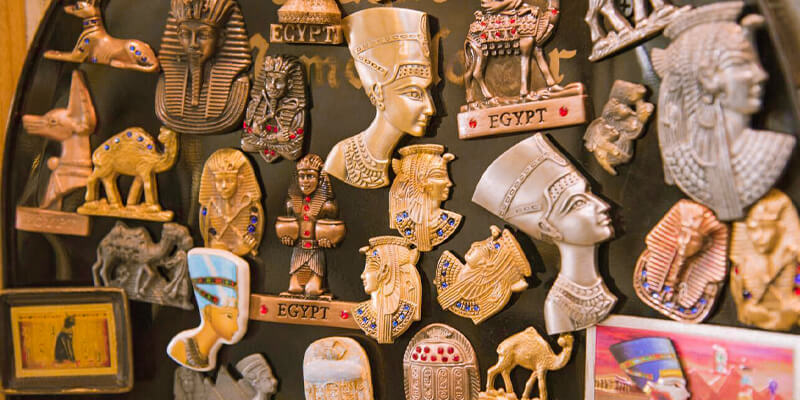
What to buy in Egypt in 2026 is one of the most common questions tr...
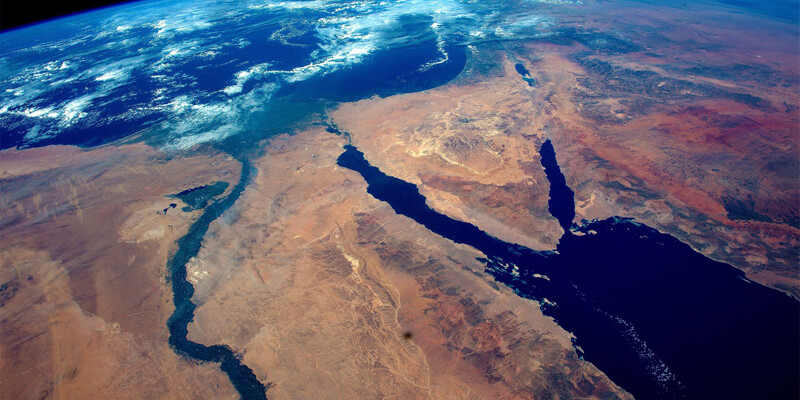
Where is located Egypt? Many travellers and readers search this exa...


We offer tours to Egypt’s most famous destinations such as the Pyramids and Sphinx in Giza, Karnak Temple and Luxor, Valley of the Kings, Sharm El Sheikh and Hurghada for beaches and diving, and Alexandria.
We provide organized tours, luxury hotel and resort bookings, comfortable transportation services, experienced tour guides, and activity ticket bookings such as diving, desert safaris, and Nile cruises.


