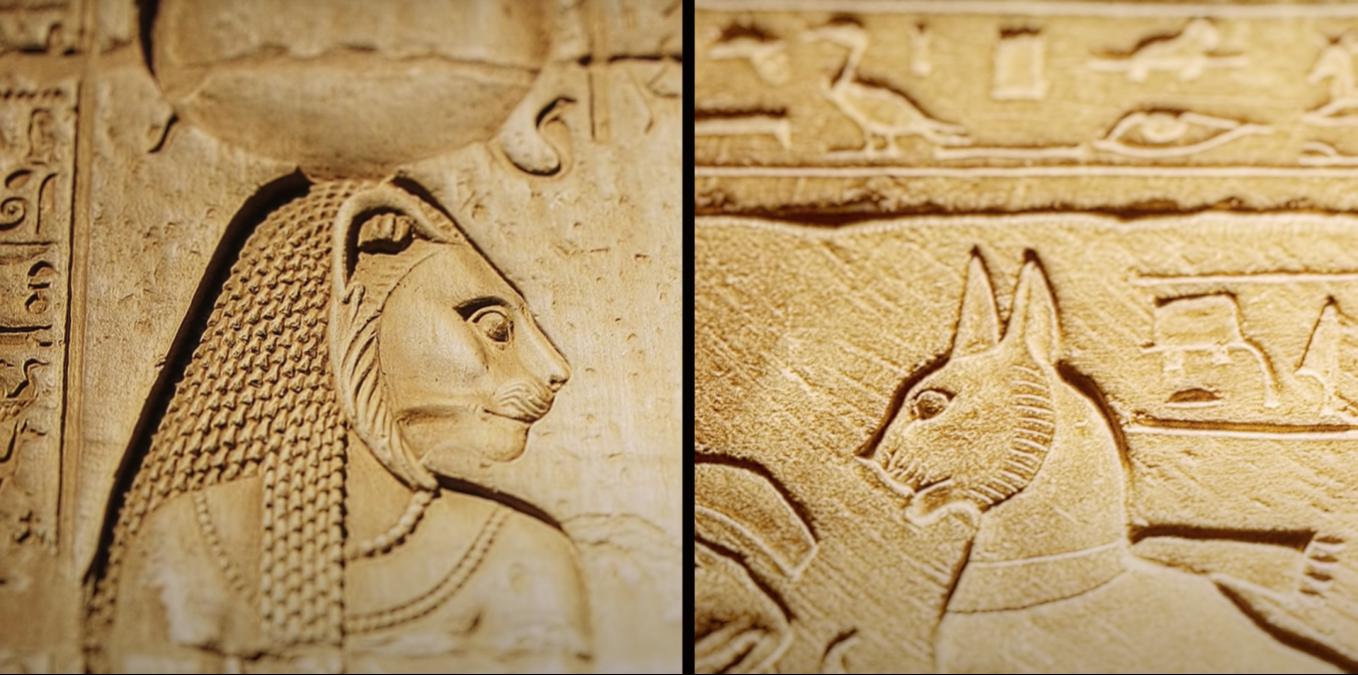
The story of bastet egyptian goddess begins thousands of years ago ...

The Temple of Horus Edfu Egypt stands as one of the most remarkable and best-preserved ancient monuments along the Nile. Dedicated to Horus, the falcon-headed god of protection and kingship, the temple reflects the grandeur of the Ptolemaic dynasty and the enduring influence of Egyptian religion. Travelers who visit Edfu often describe it as stepping back into a time capsule, where massive stone walls, carved hieroglyphs, and towering pylons reveal the spiritual devotion and architectural mastery of an ancient civilization.
Unlike many temples that have suffered from the wear of centuries, the Temple of Horus provides an almost complete vision of what a sacred site looked like during Egypt’s Hellenistic period. For those exploring Upper Egypt, a stop in Edfu offers both a cultural treasure and an unforgettable journey into mythology, architecture, and daily life along the Nile.

Edfu, known in ancient Egyptian as Behdet, was a vital settlement in Upper Egypt long before the construction of the temple. Positioned strategically between Luxor and Aswan, the city thrived as both a trade hub and a religious center.
The area was deeply associated with Horus, the falcon god, who was believed to have fought against his uncle Seth in the legendary battle for Egypt’s throne. Local traditions and myths identified Edfu as one of the key battlegrounds, making it a sacred site long before the Ptolemies built the temple we see today.
Construction of the Temple of Horus began in 237 BCE during the reign of Ptolemy III and continued under successive rulers until it was completed in 57 BCE under Ptolemy XII. Unlike earlier Egyptian temples constructed under the New Kingdom pharaohs, this monument reflects both traditional Egyptian architecture and the influence of Greek patronage.
The Ptolemies were Macedonian rulers who sought to legitimize their authority by embracing local customs and religious practices. The temple not only honored Horus but also served as a symbol of political power, reinforcing the bond between ruler and deity.
Today, the historical significance of the temple extends beyond mythology. Its inscriptions provide detailed accounts of religious rituals, offerings, and even historical events that illuminate both the spiritual and political life of Ptolemaic Egypt. For travelers, walking through Edfu’s temple is akin to opening a history book carved in stone, where every wall and chamber reveals a narrative from thousands of years ago.
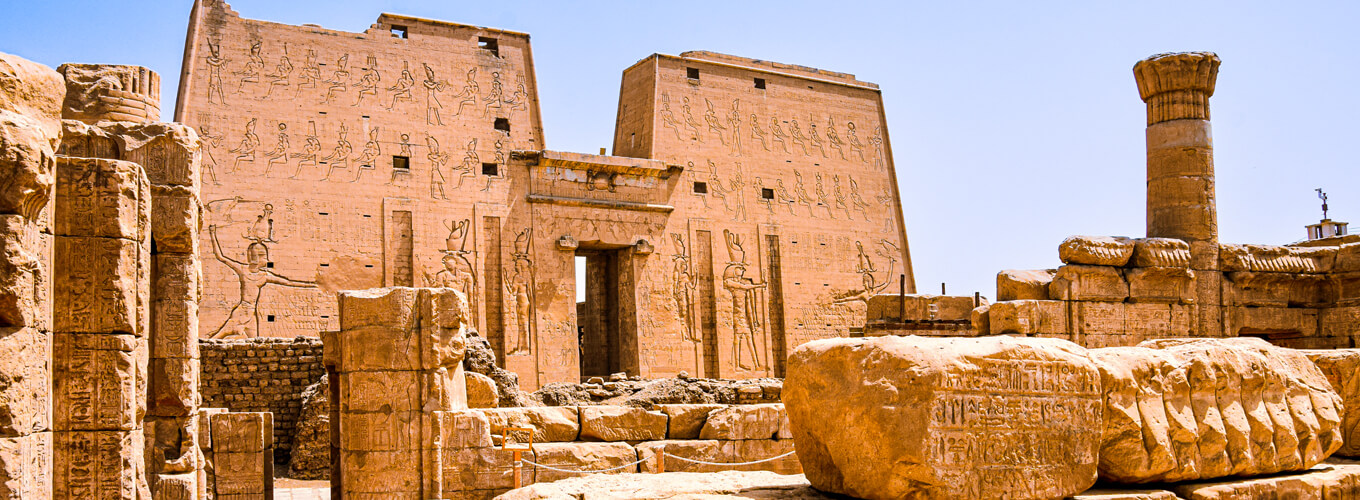
The Temple of Horus at Edfu is celebrated for its remarkable preservation, allowing visitors to experience its architecture almost as it stood in antiquity. The structure follows the classic plan of Egyptian temples, beginning with a monumental pylon gateway, leading into a vast open courtyard, then to the hypostyle hall, and finally into the inner sanctuaries. This linear progression symbolized the journey from the external world into the divine presence of the god.
The temple’s most iconic feature is its pylon, soaring nearly 36 meters high and decorated with dramatic reliefs of Horus triumphing over Seth. Beyond the pylons, the open courtyard allows sunlight to flood the space, highlighting rows of massive columns that still stand tall. The hypostyle hall, with its intricately carved lotus and papyrus capitals, creates a feeling of awe as travelers move deeper into the temple. Inside, the sanctuaries are dimly lit and atmospheric, with the central shrine once housing the sacred statue of Horus himself.
What makes the temple extraordinary is the precision of its carvings. Hieroglyphs cover nearly every wall, recounting rituals, hymns, and myths. For modern visitors, these inscriptions are a window into the religious and cultural practices of ancient Egypt. Archaeologists also point to the temple’s roof chambers and secret passages, which were likely used in festivals and processions. The blend of engineering, artistry, and symbolism makes the Temple of Horus not just a place of worship but a masterpiece of ancient construction.
The Temple of Horus was more than an architectural wonder; it was a living center of worship and a focal point of mythology. Horus, the falcon god, represented kingship, protection, and the triumph of order over chaos. At Edfu, myths tell of Horus avenging his father Osiris by battling his uncle Seth, the god of disorder and violence. According to legend, this eternal conflict was staged in Edfu, making the site sacred.
The temple’s inscriptions detail the annual Festival of the Triumph of Horus, where priests reenacted these mythical battles. Boats carrying statues of Horus and Hathor (from the nearby Dendera temple) traveled along the Nile, symbolizing divine reunions and reinforcing the cosmic balance. Such festivals were not just religious performances but communal celebrations involving music, offerings, and rituals witnessed by thousands of participants.
The temple also served as a school for priests, where sacred knowledge was preserved and passed down. Detailed ritual texts describe daily offerings, purification ceremonies, and astronomical observations. Many of the texts in Edfu are unique, providing invaluable insights into Egyptian theology. For today’s visitors, the mythology carved on the temple walls transforms a sightseeing trip into an encounter with the spiritual imagination of one of the world’s most enduring civilizations.
While the Temple of Horus at Edfu is often viewed as a religious site, it also functioned as an essential center of daily life in the ancient city. Temples in Egypt were not just places of prayer—they were economic and cultural hubs. Priests managed large estates of farmland dedicated to sustaining the temple. These lands produced crops, which were offered to Horus and redistributed to support the local population.
The temple also employed hundreds of workers, including scribes, stonecutters, gardeners, and musicians. Sacred animals, particularly falcons representing Horus, were raised and cared for within temple grounds. Festivals and processions brought together artisans, traders, and farmers, turning the temple into a vibrant center of community activity.
Inscriptions reveal that offerings included bread, wine, honey, incense, and fine linen. The daily rituals of washing, dressing, and presenting food to the god’s statue reflected the belief that Horus was a living presence in the temple. For travelers today, imagining the bustle of activity—the chanting priests, the sound of sistrums, and the aroma of incense—adds a vivid dimension to the silent ruins.
Over centuries, the Temple of Horus was buried beneath layers of sand and silt, protecting it from destruction but hiding it from view. Villagers built houses atop the buried remains, unaware of the treasure beneath their feet. It wasn’t until the 19th century that French archaeologist Auguste Mariette began systematic excavations, uncovering one of the most intact temples in Egypt.
The rediscovery of Edfu astonished scholars and travelers alike. Unlike many other sites damaged by time and conquest, the temple’s walls, ceilings, and inscriptions were remarkably preserved. Archaeologists could study its inscriptions in detail, gaining unparalleled knowledge of Ptolemaic religious practices.
Today, preservation efforts focus on protecting the temple from environmental threats such as groundwater seepage, salt deposits, and tourism-related wear. Modern conservation uses digital documentation, protective barriers, and climate monitoring to ensure its survival. For visitors, this means that the temple can be experienced much as it appeared 2,000 years ago, offering an authentic encounter with history.
For modern travelers, a visit to the Temple of Horus in Edfu is often included in Nile River cruises between Luxor and Aswan. The temple lies on the west bank of the Nile and is accessible by carriage or bus from the riverside. Arriving at the site, visitors are greeted by the imposing pylons and the sight of Horus statues standing guard at the entrance.
Inside, the temple’s layout encourages exploration. Travelers can walk through the massive courtyard, admire the hieroglyphic-covered walls, and step into the sacred sanctuary where Horus once resided. Guided tours help decode the inscriptions, while photography allows visitors to capture the grandeur of the architecture.
The best time to visit is during the cooler months between October and April, as summers in Upper Egypt can be extremely hot. Many travelers choose morning visits to avoid crowds and enjoy softer light for photography. Nearby markets in Edfu offer souvenirs, including traditional crafts and replicas of falcon statues, making the experience even richer.
Traveling to Edfu is an adventure best combined with broader itineraries along the Nile. Most visitors experience the temple as part of a Nile cruise, which stops at key sites between Luxor and Aswan. This option allows for a comfortable journey, complete with guided tours and local insights. Independent travelers can also reach Edfu by train or private car from Luxor or Aswan, though this requires more planning.
When visiting, wearing comfortable shoes is essential, as exploring the temple involves walking across uneven stone floors. Bringing water, sunscreen, and a hat is highly recommended due to the intensity of the sun. Hiring a knowledgeable guide enriches the visit, as many of the temple’s carvings contain symbolic meanings not easily understood without context.
Entrance fees are affordable, and tickets can be purchased at the site. Photography is permitted in most areas, though visitors are advised to respect restricted zones. Travelers interested in local culture can also explore Edfu town, experiencing its traditional markets and warm hospitality. A stop at the Temple of Horus is not just about history—it’s about engaging with the rhythm of life along the Nile.

Among the many monuments in Egypt, the Temple of Horus at Edfu stands out for its completeness, its mythology, and its ability to connect travelers directly with the ancient past. Unlike ruins that require imagination to fill in missing pieces, Edfu presents itself as a living monument. Its soaring pylons, intact sanctuaries, and vivid inscriptions allow visitors to step into the world of priests, pharaohs, and worshippers without difficulty.
For history lovers, it provides detailed insights into the Ptolemaic era, a fascinating period when Egyptian traditions intertwined with Greek influence. For spiritual seekers, it offers an encounter with myths that shaped millennia of belief. And for travelers simply looking to marvel at ancient achievements, it delivers awe-inspiring architecture that rivals the great temples of Luxor and Karnak.
Adding the Temple of Horus to an Egypt itinerary ensures that travelers experience not only the grandeur of pharaonic civilization but also the continuity of cultural identity. It is a site that inspires wonder, reflection, and appreciation for humanity’s enduring creativity.
The story of bastet egyptian goddess begins thousands of years ago ...
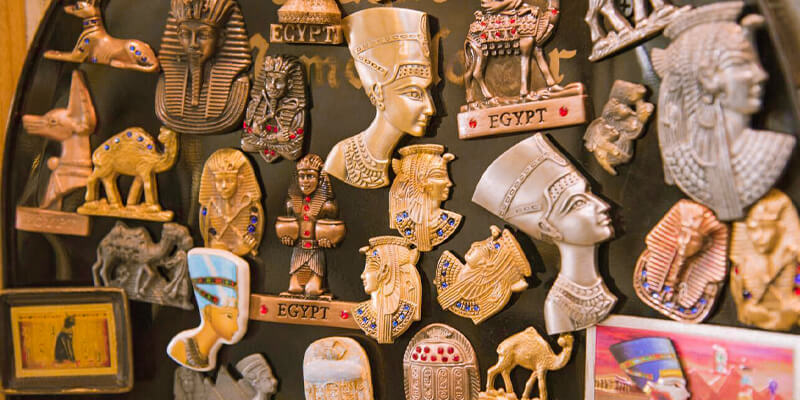
What to buy in Egypt in 2026 is one of the most common questions tr...

Where is located Egypt? Many travellers and readers search this exa...


We offer tours to Egypt’s most famous destinations such as the Pyramids and Sphinx in Giza, Karnak Temple and Luxor, Valley of the Kings, Sharm El Sheikh and Hurghada for beaches and diving, and Alexandria.
We provide organized tours, luxury hotel and resort bookings, comfortable transportation services, experienced tour guides, and activity ticket bookings such as diving, desert safaris, and Nile cruises.


